Ok, so I've only been around the country. You can tell I drove out from Ohio to California once--check out all those drive through states! Bryce and I had a blast. Camels and Chocolate drops the whole way!

create your own visited states map

My friend Donna Jean tagged me, so I'm it. Here are my requisite lists of 3:

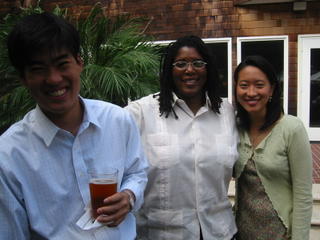
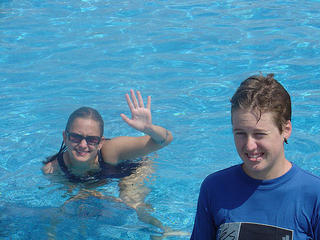
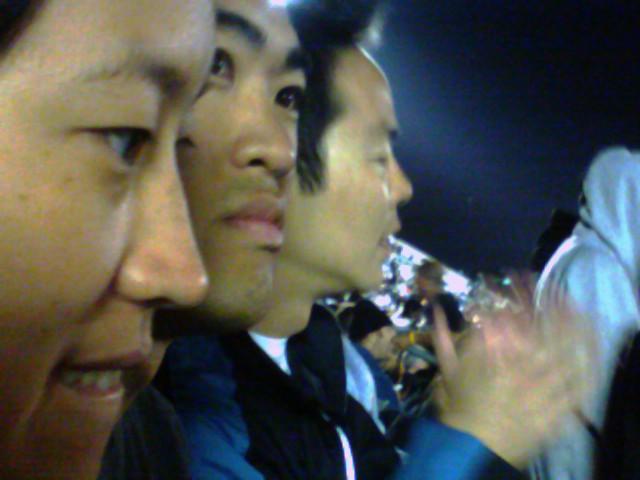
 Over the course of the reunion weekend two of my favorite people, Jared and Jasmine, commandeered my camera phone and composed several self-portraits. I like this one.
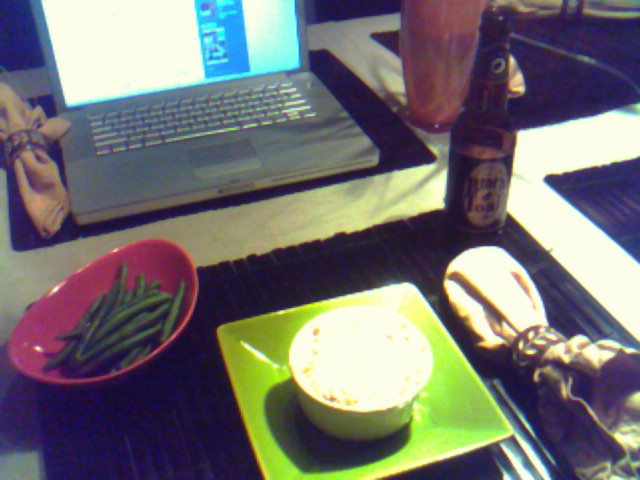
 I looked at the menu and immediately concluded that I was going to need to suspend my meat-free food guidelines for a few days. Steamed veggies simply weren’t to cut it. I ordered the Vienna Schnitzel and a heifeweissen. Vienna Schitzel. Vienna. I always thought that it was wienerschnitzel and that it was some sort of German sausage. Turns out that any schnitzel is breaded fried meat and this particular one is a pork cutlet served in a traditional Austrian style. So that explains it. That’s why the kid on Silver Spoons, little Ricky Schroder, would inevitably burst onto the set each episode and exclaim, “Hey! I got an idear!” Schroder. It’s a German thing. Now I understand.
 The wall came down in 1989, but the food on the other side continues to suck. I had a salami cheese and mushroom pizza that was the envy of the rest of the table—they were suffering through soggy broccoli and low grade steaks. Thankfully, I was in my bed by 10pm. I was already severely sleep deprived by this point—jet lag and the furious pace at the office left little time for sleeping. My circadian rhythms refused to shift to the zeit of the reich.
  I had a 5:15am wakeup call, but my eyes popped open at 2:15 am (5:15 pm Cali time.) When the car service picked us up at 5:45 am for our flight to Paris, I was surly and confused.
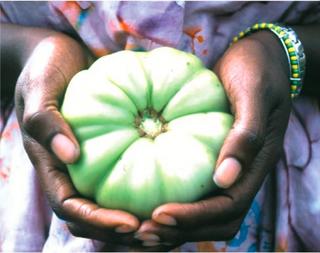
 He talked about simple solutions, kids raised on kale, and families who have lived on the land for generations. He described grain share program for residents of San Francisco who buy whole grains—oats, wheat, millet, and the like—grown by a single farmer named Jennifer and some horses. Two of my favorite photos were of rooftop gardens in New York City and some wacky people who decided that a sheep dairy was a good idea. They make sheep cheeses that look like "moldy horse turds." Mmmm...horse turds. I also loved the images of black farmers who work with black farmers collectives. They drive their goods into Chicago for the Austin Farmers Market in a neighborhood that doesn’t have a grocery store. There’s a black farmers market here in West Oakland too, and of course, the People’s Grocery which drives an organic grocery truck around West Oakland trying to heal food poverty one block of tofu at a time.
 Ableman says that those who know how to coax food from the earth are true leaders. I believe that. The passionate, beyond-organic farmers that he described are leaders pointing a way to a new future. Another speaker, David Orr, contended that ecological design points to two different futures: one, agrarian-based, simplified, and extremely local, and the other technological, prosperous, and fecund. I don’t see the conflict between the two. Why not build a world where there are small organic farms at the heart of every neighborhood, people work near where they live or telecommute frequently, mass transit provides comfortable and convenient transport, and the biological and technological ingredients of our world—from the plastics in our computer monitors to the toppings on our pizzas flow continuously in separate cycles of reuse. Yeah, yeah, yeah, and why don’t we all just hold hands and sing. I type that with a sort of bitter sarcasm borne in the distance between utopia and reality, but there’s real power in song and Bernice Johnson Reagon told us all about it at Bioneers. More on her later!

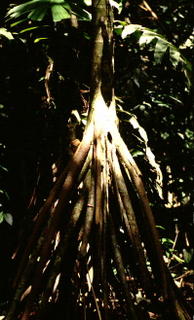 This area of study has caused some consternation in the scientific community; it’s been called an “awkward growth of knowledge.” It’s awkward because it requires humans to rethink our notion of intelligence, and step down from our privileged position as the only species who possesses it. We’ve got this silly idea that nature is everything in the world except humans and that humans are the only species that possess intelligence. Thus it’s conceptually difficult for us to even conceive of sentience beyond ourselves. Narby contends that it’s not nature that lacks intelligence, but our concepts.